
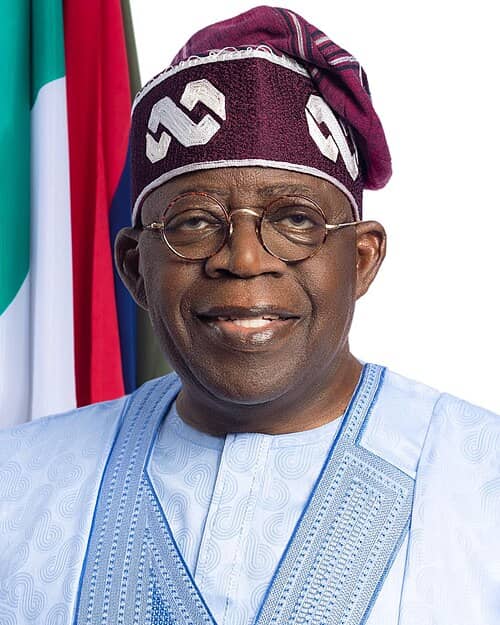
Renewed Hope Agenda: From Difficult Decisions to Economic Recovery and National Transformation.
When President Bola Ahmed Tinubu unveiled his administration’s policy direction under the slogan Renewed Hope Agenda upon assuming office on May 29, 2023, many Nigerians did not fully understand the depth of the transformation he intended to pursue.
Today, as the country continues to navigate economic challenges and the consequences of major policy decisions, one thing has become increasingly clear: President Tinubu chose a difficult path of economic restructuring rather than maintaining policies that previous administrations had struggled to reform.
His approach has been defined by a philosophy that may be summarised in one expression: No easy lies, just tough truths and real results.
For decades, Nigeria operated an economy burdened by fuel subsidy payments, multiple exchange rates, rising public debt, fiscal distortions and excessive dependence on imported goods. While these policies sometimes provided temporary relief, they also created structural problems that threatened the country’s economic future.
Successive administrations recognised some of these challenges but struggled to take the decisive steps required to address them.
Then came Bola Ahmed Tinubu.
THE COURAGE TO MAKE DIFFICULT DECISIONS
On May 29, 2023, during his inauguration as President, Tinubu made a declaration that immediately changed the direction of Nigeria’s economic conversation: “Fuel subsidy is gone.”
It was a bold and controversial announcement. Nigerians felt the immediate consequences through increased transportation costs, higher food prices and pressure on household incomes.
However, the Tinubu administration maintained that the subsidy regime had become financially unsustainable, with substantial benefits accruing to smugglers, middlemen and those exploiting the system rather than ordinary Nigerians.
The administration also moved to unify the foreign exchange market, seeking to eliminate the distortions associated with multiple exchange rates and establish a more transparent currency market.
These decisions were not painless. Millions of Nigerians experienced economic hardship, and the government faced criticism over the timing, implementation and social consequences of its reforms.
Nevertheless, the argument advanced by supporters of the administration is that Nigeria could not continue postponing difficult economic decisions while expecting a different outcome.
FROM ECONOMIC DISTORTIONS TO STRUCTURAL REFORMS
The Renewed Hope Agenda is built around the belief that Nigeria must move beyond an economy sustained by government subsidies and excessive imports to one driven by production, investment, entrepreneurship and industrial development.
One significant area of attention has been the increase in revenue allocations to the three tiers of government through the Federation Account Allocation Committee (FAAC).
Higher allocations have provided states and local governments with additional fiscal resources to address infrastructure, healthcare, education and other developmental responsibilities.
The administration has also pursued reforms in the energy sector, including support for domestic refining, compressed natural gas (CNG) initiatives and efforts to reduce Nigeria’s dependence on imported petroleum products.
The commencement of operations at the Dangote Refinery and the resumption of refining activities at the Port Harcourt Refinery have strengthened the argument for greater domestic refining capacity, although sustained production and reliable supply remain important measures of success.
In the education sector, the Nigerian Education Loan Fund (NELFUND) represents another major intervention. The initiative is designed to expand access to tertiary education by providing financial support to eligible students who might otherwise struggle to meet their educational expenses.
The increase in the national minimum wage from N30,000 to N70,000 also marked an important adjustment in the government’s response to workers’ welfare concerns, even as the rising cost of living continues to challenge the purchasing power of Nigerian households.
THE RESULTS AND THE CHALLENGES
Supporters of President Tinubu point to improvements in government revenue, increased fiscal allocations, domestic refining investments, non-oil export development and the expansion of social intervention programmes as evidence that the reforms are beginning to reshape the Nigerian economy.
They also argue that the country’s economic future cannot be measured solely by the immediate discomfort associated with policy changes but by the strength, stability and productivity of the economic foundation being created.
However, the administration must recognise that economic reform is not complete until its benefits are felt in the homes, markets and businesses of ordinary Nigerians.
Inflation, food affordability, unemployment, insecurity, electricity challenges and the high cost of transportation remain critical national concerns.
The success of the Renewed Hope Agenda will ultimately depend on how effectively the government translates its economic policies into improved living standards, job creation, affordable food, reliable electricity and opportunities for millions of citizens.
TINUBU AND THE POLITICS OF TOUGH TRUTHS
Nigeria’s political history is filled with administrations that pursued different development philosophies.
Former President Olusegun Obasanjo implemented major economic and debt-reduction initiatives. President Goodluck Jonathan’s administration oversaw the rebasing of Nigeria’s GDP.
Former President Muhammadu Buhari prioritised infrastructure development, including railway projects.
Each administration made its contributions, while also facing its own challenges.
President Tinubu’s defining economic choices have been the removal of petrol subsidy and the movement towards exchange-rate unification.
Whether these reforms will deliver the promised long-term transformation remains a matter for economic assessment and public accountability. But their significance in Nigeria’s policy history cannot be ignored.
The President’s supporters believe that the country must confront the structural weaknesses that have prevented it from reaching its economic potential.
Their position is that temporary hardship should not become an excuse to abandon necessary reforms, provided the government remains responsive to the suffering of the people and ensures that the gains are fairly distributed.
THE PROMISED LAND IS A WORKING NIGERIA
The promised land should not simply be a Nigeria where petrol is artificially cheap or where the government maintains an unsustainable economic arrangement.
It should be a country where citizens enjoy affordable transportation, quality education, accessible healthcare, decent employment and reliable electricity.
It should be a country where a qualified student can access educational opportunities without political connections; where state governments can execute meaningful development projects with improved financial capacity; and where Nigerian industries produce goods for local consumption and international markets.
It should be a nation that exports more, imports less, creates wealth and provides opportunities for its young population.
That is the larger promise of the Renewed Hope Agenda.
President Tinubu has chosen a difficult road, but difficult decisions must be accompanied by compassionate governance, transparency, accountability and measurable results.
The Nigerian people deserve not just explanations of economic reforms but tangible improvements in their daily lives.
2027: THE JOURNEY TO RENEWED HOPE
As political conversations gradually turn towards the 2027 general elections, supporters of President Bola Ahmed Tinubu are making the case for continuity, arguing that the reforms initiated by his administration require sufficient time to mature and deliver their full benefits.
Their message is that Nigeria should not abandon a long-term economic restructuring process before its outcomes can be properly assessed.
For President Tinubu, the challenge is clear: consolidate the gains, address the shortcomings, ease the burden on ordinary citizens and ensure that the dividends of governance reach every part of the country.
The Renewed Hope Agenda must ultimately be judged by the opportunities it creates, the poverty it reduces, the jobs it generates and the confidence it restores in Nigeria’s future.
No easy lies. Tough truths, responsible leadership and measurable results.
That is the argument being advanced by those who believe in President Bola Ahmed Tinubu’s economic vision and are calling for his re-election in 2027.
PBAT FOR PRESIDENT 2027: THE JOURNEY TO THE PROMISED LAND CONTINUES.

